pesto sauce (or other pasta-like sauce of choice, if any)
2 each small tomatoes (optional)
1/4 tsp garlic powder (optional)
1 tsp onion powder (optional)
DIRECTIONS
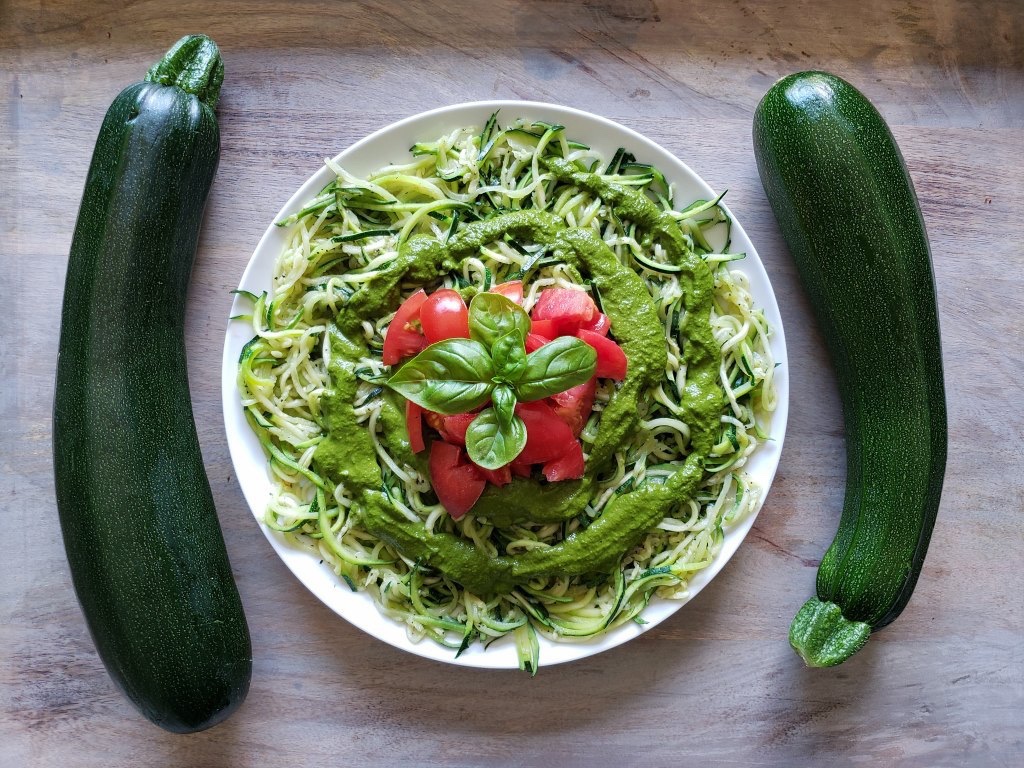
Wash your zucchini, and then use spiralizer* to create zucchini noodles. *See notes below
Add a small amount of olive oil or butter to a saute pan or skillet over medium-high heat.
Next, if using garlic and onions, add them to the pan and cook until the onions are translucent.
Now add the zoodles and gently toss them every minute or so throughout the cooking process which should only be about 5 minutes. Do not cover the pan while cooking – that will make them extra wet. Allowing steam to be released is good.
Once finished cooking, plate the zoodles and sauce or top them anyway you see fit and enjoy immediately. There will be a bit of excess liquid in the pan. If you do not wish to have all the liquid in your dish, you can either strain your zoodles or use tongs to plate them – leaving much of the liquid behind. We like to serve our zoodles with a few dollops of pesto and chopped fresh tomatoes.
2 medium-size serrano chiles, unseeded and thinly sliced (2 Tbsp. plus 2 tsp.)
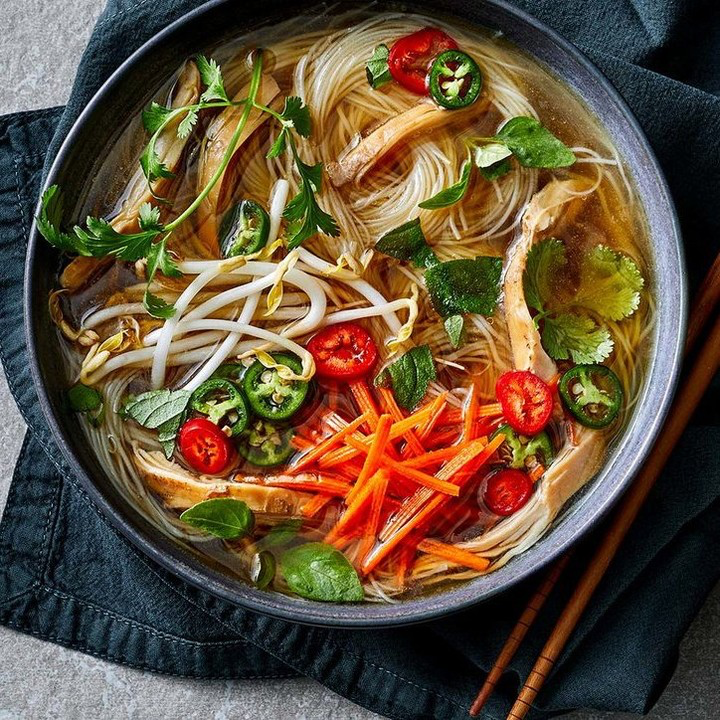
Optional toppings: matchstick carrots, torn fresh mint and basil leaves, Sriracha chile sauce
8 lime wedges
DIRECTIONS
Select SAUTÉ setting on a 6-quart multi-function programmable pressure cooker (such as Instant Pot). Allow to preheat about 5 minutes. Place onion halves, cut side down, in cooker. Add ginger; cook, undisturbed, until onion is slightly charred on cut sides, about 10 minutes. Add coriander seeds, cloves, and star anise; cook, stirring constantly, until fragrant, about 1 minute. Add chicken, broth, fish sauce, and brown sugar.
Close and seal lid. Turn Pressure Release Valve to Sealing position. Select MANUAL/PRESSURE COOK setting. Set to HIGH PRESSURE for 15 minutes. (It will take 15 to 20 minutes for cooker to come up to pressure before cooking time begins.) Let pressure release naturally. (This will take about 10 minutes.) Carefully turn Pressure Release Valve to Venting position, and let steam fully escape. (This will take 1 to 2 minutes.) Carefully remove lid.
Transfer chicken to a large plate; let rest until cool enough to handle, about 10 minutes. Remove and discard skin and bones; shred meat.
While chicken cools, pour broth mixture in cooker through a fine mesh strainer into a heatproof bowl; discard solids. Return strained broth to cooker. Add noodles, stirring to submerge; let stand until softened, about 5 minutes.
Return shredded chicken to mixture in cooker. Ladle soup evenly into 8 bowls. Top evenly with bean sprouts, cilantro, chiles, and other desired toppings. Serve with lime wedges.
Apples, berries, grapefruit, oranges, peaches, pears, plums, prunes, red grapes
2 servings Probiotics:
Yogurt- any type including greek style, sugar free fruit flavored; plain; and low fat (6 oz. = one serving), Live Active Cottage Cheese (1/2C = 1 serving)
Condiments (in moderation – the more you use the less you’ll lose that day! I actually avoid altogether) :
Penned by James Stein, a cardiologist at UW on May 6, 2020
COVID-19 update as we start to leave our cocoons. The purpose of this post is to provide a perspective on the intense but expected anxiety so many people are experiencing as they prepare to leave the shelter of their homes. My opinions are not those of my employers and are not meant to invalidate anyone else’s – they simply are my perspective on managing risk.
In March, we did not know much about COVID-19 other than the incredibly scary news reports from overrun hospitals in China, Italy, and other parts of Europe. The media was filled with scary pictures of chest CT scans, personal stories of people who decompensated quickly with shortness of breath, overwhelmed health care systems, and deaths. We heard confusing and widely varying estimates for risk of getting infected and of dying – some estimates were quite high.
Key point #1: The COVID-19 we are facing now is the same disease it was 2 months ago. The “shelter at home” orders were the right step from a public health standpoint to make sure we flattened the curve and didn’t overrun the health care system which would have led to excess preventable deaths. It also bought us time to learn about the disease’s dynamics, preventive measures, and best treatment strategies – and we did. For hospitalized patients, we have learned to avoid early intubation, to use prone ventilation, and that remdesivir probably reduces time to recovery. We have learned how to best use and preserve PPE. We also know that several therapies suggested early on probably don’t do much and may even cause harm (ie, azithromycin, chloroquine, hydroxychloroquine, lopinavir/ritonavir). But all of our social distancing did not change the disease. Take home: We flattened the curve and with it our economy and psyches, but the disease itself is still here.
Key point #2: COVID-19 is more deadly than seasonal influenza (about 5-10x so), but not nearly as deadly as Ebola, Rabies, or Marburg Hemorrhagic Fever where 25-90% of people who get infected die. COVID-19’s case fatality rate is about 0.8-1.5% overall, but much higher if you are 60-69 years old (3-4%), 70-79 years old (7-9%), and especially so if you are over 80 years old (CFR 13-17%). It is much lower if you are under 50 years old (<0.6%). The infection fatality rate is about half of these numbers. Take home: COVID-19 is dangerous, but the vast majority of people who get it, survive it. About 15% of people get very ill and could stay ill for a long time. We are going to be dealing with it for a long time.
Key point #3: SARS-CoV-2 is very contagious, but not as contagious as Measles, Mumps, or even certain strains of pandemic Influenza. It is spread by respiratory droplets and aerosols, not food and incidental contact. Take home: social distancing, not touching our faces, and good hand hygiene are the key weapons to stop the spread. Masks could make a difference, too, especially in public places where people congregate. Incidental contact is not really an issue, nor is food.
What does this all mean as we return to work and public life? COVID-19 is not going away anytime soon. It may not go away for a year or two and may not be eradicated for many years, so we have to learn to live with it and do what we can to mitigate (reduce) risk. That means being willing to accept some level of risk to live our lives as we desire. I can’t decide that level of risk for you – only you can make that decision. There are few certainties in pandemic risk management other than that fact that some people will die, some people in low risk groups will die, and some people in high risk groups will survive. It’s about probability.
Here is some guidance – my point of view, not judging yours:
People over 60 years old are at higher risk of severe disease – people over 70 years old, even more so. They should be willing to tolerate less risk than people under 50 years old and should be extra careful. Some chronic diseases like heart disease and COPD increase risk, but it is not clear if other diseases like obesity, asthma, immune disorders, etc. increase risk appreciably. It looks like asthma and inflammatory bowel disease might not be as high risk as we thought, but we are not sure – their risks might be too small to pick up, or they might be associated with things that put them at higher risk.
People over 60-70 years old probably should continue to be very vigilant about limiting exposures if they can. However, not seeing family – especially children and grandchildren – can take a serious emotional toll, so I encourage people to be creative and flexible. For example, in-person visits are not crazy – consider one, especially if you have been isolated and have no symptoms. They are especially safe in the early days after restrictions are lifted in places like Madison or parts of major cities where there is very little community transmission. Families can decide how much mingling they are comfortable with – if they want to hug and eat together, distance together with masks, or just stay apart and continue using video-conferencing and the telephone to stay in contact. If you choose to intermingle, remember to practice good hand hygiene, don’t share plates/forks/spoons/cups, don’t share towels, and don’t sleep together.
Social distancing, not touching your face, and washing/sanitizing your hands are the key prevention interventions. They are vastly more important than anything else you do. Wearing a fabric mask is a good idea in crowded public place like a grocery store or public transportation, but you absolutely must distance, practice good hand hygiene, and don’t touch your face. Wearing gloves is not helpful (the virus does not get in through the skin) and may increase your risk because you likely won’t washing or sanitize your hands when they are on, you will drop things, and touch your face.
Be a good citizen. If you think you might be sick, stay home. If you are going to cough or sneeze, turn away from people, block it, and sanitize your hands immediately after.
Use common sense. Dial down the anxiety. If you are out taking a walk and someone walks past you, that brief (near) contact is so low risk that it doesn’t make sense to get scared. Smile at them as they approach, turn your head away as they pass, move on. The smile will be more therapeutic than the passing is dangerous. Similarly, if someone bumps into you at the grocery store or reaches past you for a loaf of bread, don’t stress – it is a very low risk encounter, also – as long as they didn’t cough or sneeze in your face (one reason we wear cloth masks in public!).
Use common sense, part II. Dial down the obsessiveness. There really is no reason to go crazy sanitizing items that come into your house from outside, like groceries and packages. For it to be a risk, the delivery person would need to be infectious, cough or sneeze some droplets on your package, you touch the droplet, then touch your face, and then it invades your respiratory epithelium. There would need to be enough viral load and the virions would need to survive long enough for you to get infected. It could happen, but it’s pretty unlikely. If you want to have a staging station for 1-2 days before you put things away, sure, no problem. You also can simply wipe things off before they come in to your house – that is fine is fine too. For an isolated family, it makes no sense to obsessively wipe down every surface every day (or several times a day). Door knobs, toilet handles, commonly trafficked light switches could get a wipe off each day, but it takes a lot of time and emotional energy to do all those things and they have marginal benefits. We don’t need to create a sterile operating room-like living space. Compared to keeping your hands out of your mouth, good hand hygiene, and cleaning food before serving it, these behaviors might be more maladaptive than protective.
There are few absolutes, so please get comfortable accepting some calculated risks, otherwise you might be isolating yourself for a really, really long time. Figure out how you can be in public and interact with people without fear.
We are social creatures. We need each other. We will survive with and because of each other. Social distancing just means that we connect differently. Being afraid makes us contract and shut each other out. I hope we can fill that space created by fear and contraction with meaningful connections and learn to be less afraid of each of other.
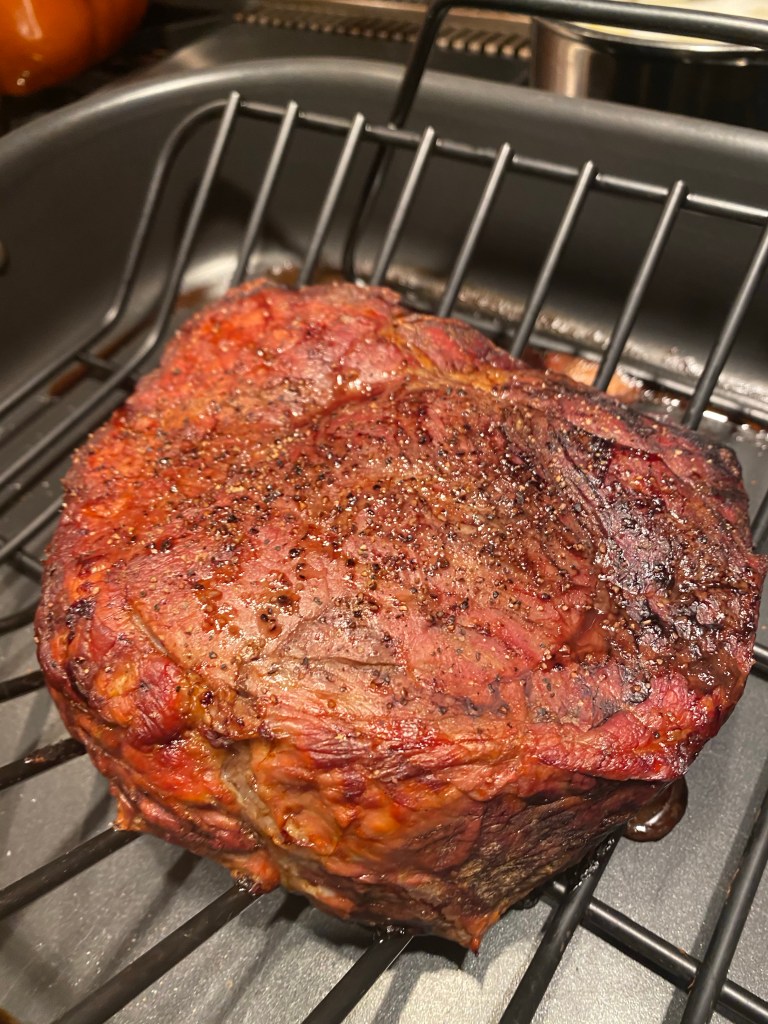
I’ve always been intimidated by cooking large cuts of beef. Which is silly because we buy a side of it every year. I could never count on it coming out perfectly UNTIL I used this recipe.
It’s written for Eye of Round, but I used it tonight on a 4 pound Sirloin Tip. Just follow the equation for time + weight, for a perfectly juicy, slight pink on the inside, outcome.
1. Preheat the oven to 500 degrees F (260 degrees C).
2. Season the roast with salt and pepper and place in a roasting pan or baking dish.
3. Do NOT cover or add water.
4. Place the roast in the preheated oven.
5. Reduce the temperature to 475 degrees F (245 degrees C).
6. Roast for 7 minutes per pound.
7. Then turn off the oven and let the roast sit in the hot oven for 2 1/2 hours. Do NOT open oven door AT ALL during this time!
8. Remove the roast from the oven, the internal temperature should have reached at least 145 degrees F (65 degrees C). Carve into thin slices to serve.
NUTRITION
Calories 227 kcal 11% Carbohydrates 0 g 0% Cholesterol 71 mg 24% Fat 12.6 g 19% Fiber 0 g 0% Protein 26.6 g 53% Sodium 123 mg 5%
The authentic, takes a FULL day in the kitchen, version.
The first time I tasted this recipe, was in the early ‘80’s. The commercial photography agent I worked for, hired a Hungarian caterer for a party we were throwing in the studio.
It was LOVE at first bite!
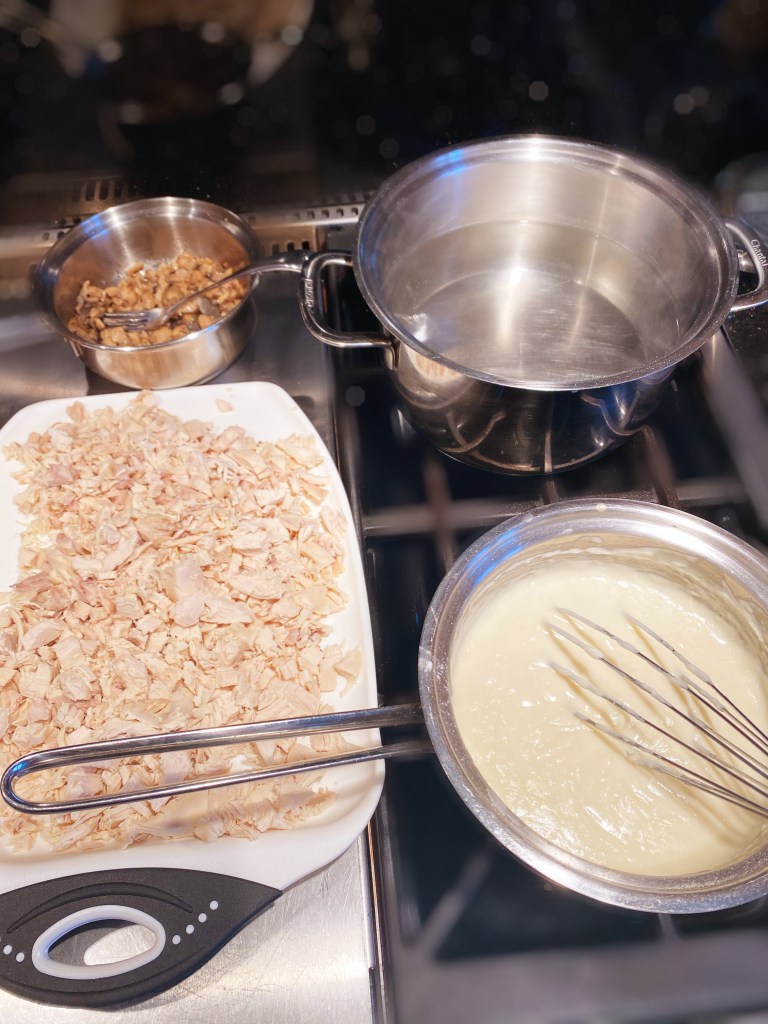
This recipe isn’t difficult, but you can’t short cut any steps and get the same great flavor. I like to steam the whole chicken the day before, as it makes it easy to skim the fat off the broth, that is the basis for the thick, creamy, roux.
I also love that you can make it ahead – to serve for company.
Chicken Tetrazzini
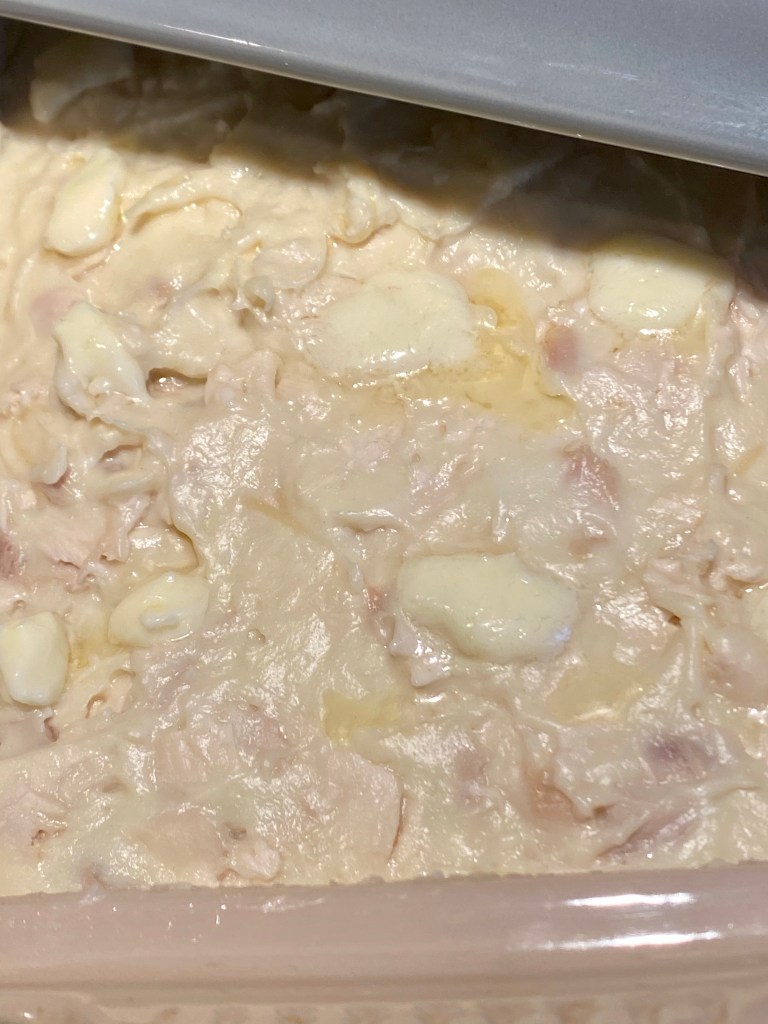
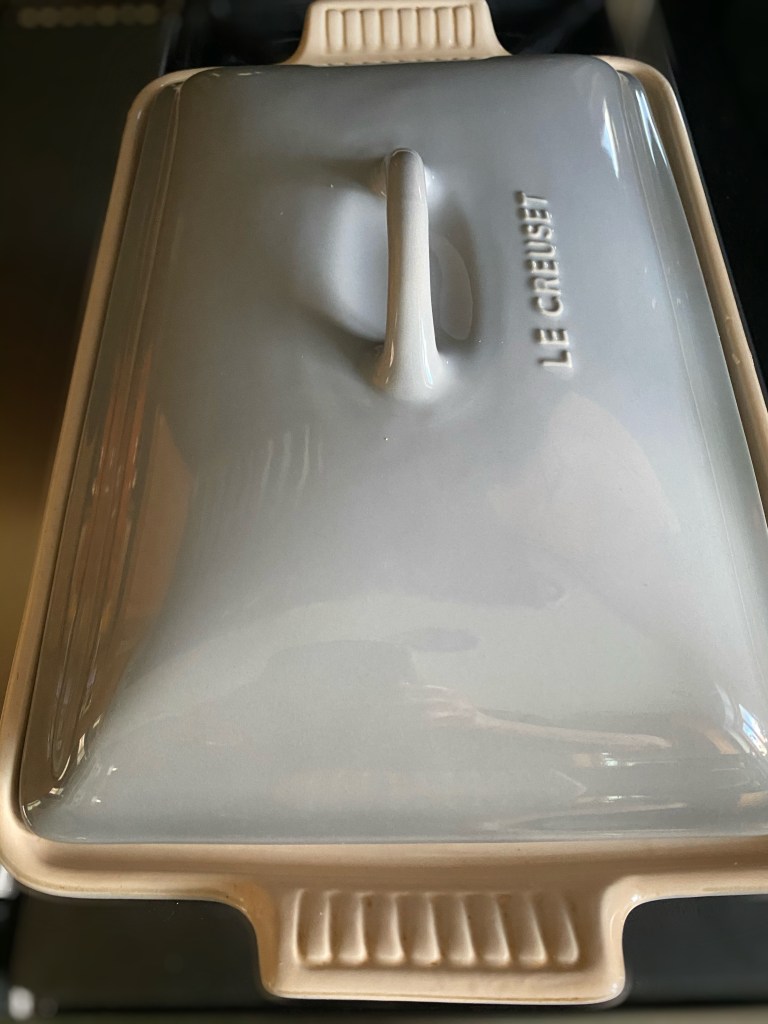
Fully assembled but not baked …
★★★★★
Italian, Pasta, Poultry
Servings: 6 servings Source: Pope Cooking School
INGREDIENTS
3 pounds frying chicken
2 cups hot water
salt, as suggested
½ pound broad egg noodles
2 tablespoons melted butter
2 tablespoons grated Italian cheese
½ pound fresh mushrooms — sauteed in butter
bit pepper
several slivers garlic
additonal salt, pepper and cheese
SAUCE FOR TETRAZZINI:
¾ cup all-purpose flour
½ cup melted butter
1 cup warm milk or cream
2 cups warm chicken stock
1½ teaspoons salt
2 tablespoons dry sauterne or sherry wine
DIRECTIONS
Steam chicken in the 2 cups hot water and 2 teaspoons salt, about 40 to 60 minutes, or until tender. Let stand until cool enough to handle. Strain stock for sauce. Remove meat from bones, and cut chicken into pieces about 3 inches long.
Cook noodles in gently boiling unsalted water about 10 minutes or until crisply tender, but not too soft. Then pour a little cold water into utensil and drain noodles thoroughly. Pour noodles into bowl and at once season with 1 teaspoon salt, 2 tablespoons melted butter, cheese and 1 cup of Sauce for Chicken Tetrazinni (recipe follows).
Saute mushrooms in the 2 T butter for five minutes. Season with 1/2 teaspoon of salt, pepper, and slivers of garlic, and continue to cook several minutes.
Pour and spread noodle mixture into a flat, buttered baking dish that measures about 10 × 1 1/3 inches (round or oblong casserole may be used).
Place the sauteed mushrooms over noodles, pour a little of the sauce over mushrooms, then cover with the cut chicken. Season with about 1/2 teaspoon salt and a little pepper. Pour rest of sauce (that has cooled for about 15 minutes) over chicken and sprinkle top with about 1/4 cup grated Italian cheese and drizzle with 2 T melted butter. Bake at 350 degrees about 30 minutes, until golden brown. Serve hot.
Sauce for Tetrazzini:
Blend flour into melted butter; gradually add milk or cream and chicken stock, stirring constantly. Cook until thick and smooth, then simmer 5 minutes, adding salt and wine toward end. Let cool about 15 minutes before pouring over top of chicken. If too thick, add 1 or 2 tablespoons of milk.
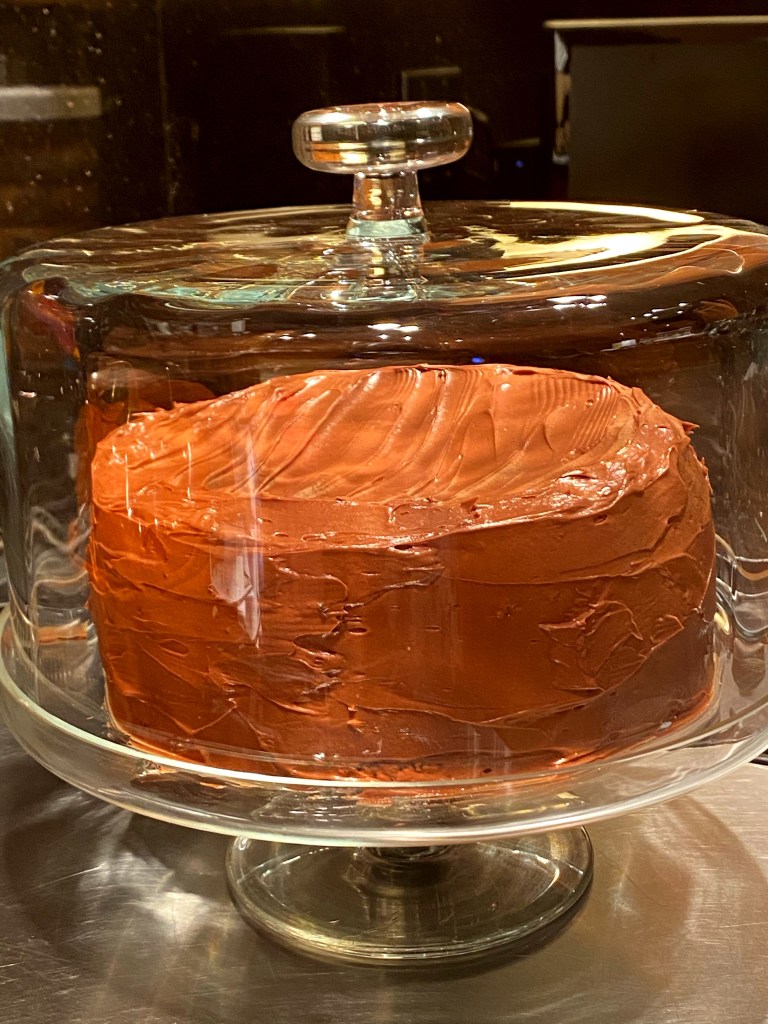
I think the final weekend of isolation (for some) calls for a special Chocolate Cake 🍰
** Update – my first attempt at this cake didn’t make it out of the pans. SO disappointing, but you know what? We ate it anyway! It was my fault for forgetting to put parchment paper on the bottom of the cake pans.
This makes a VERY runny batter… I thought it was my mistake, but others say the same. It’s that hot coffee the recipe calls for. It also sinks in the middle after baking. Sounds like I’m talking you out of making it, but I want you to have a good outcome.
I get to taste it WITH the frosting tomorrow as it’s too late tonight. If the cake itself wasn’t so delicious, I never would have gone through the trouble a second time!!
6 ounces good semisweet chocolate such as Valrhona (see note)
½ pound (2 sticks) unsalted butter at room temperature
1 extra-large egg yolk at room temperature
1 teaspoon pure vanilla extract
1¼ cups sifted confectioners’ sugar
1 tablespoon instant coffee granules, such as Nescafe
DIRECTIONS
Preheat the oven to 350 degrees. Butter two 8-inch round cake pans. Line with parchment paper, then butter and flour the pans.
Sift the flour, sugar, cocoa, baking soda, baking powder, and salt into the bowl of an electric mixer fitted with the paddle attachment and mix on low speed until combined. In another bowl, combine the buttermilk, oil, eggs, and vanilla. With the mixer on low speed, slowly add the wet ingredients to the dry ones. With mixer still on low, add the coffee and stir just to combine, scraping the bottom of the bowl with a rubber spatula. Pour the batter evenly into the prepared pans and bake for 35 to 40 minutes, until a cake tester comes out clean. Cool in the pans for 30 minutes, then turn them out onto a cooling rack and cool completely. (Not to worry; the top will sink a little in the center.)
Place one layer, flat side up, on a flat plate or cake pedestal. With a knife or offset spatula, spread a thin layer of buttercream on the top only. Place the second layer on top, flat side up, and spread the frosting evenly first on the sides and then on the top of the cake. Cut in wedges and serve at room temperature.
Chop the chocolate and place it in a heatproof bowl over a pan over simmering water. Stir until just melted and set aside until cooled to room temperature.
Beat the butter in the bowl of an electric mixer fitted with the paddle attachment on medium-high speed until light yellow and fluffy, about 3 minutes. Add the egg yolk and vanilla and continue beating for 3 minutes. Turn the mixer to low, gradually add the confectioners’ sugar, then beat at medium speed, scraping down the bowl as necessary, until smooth and creamy. Dissolve the coffee in 2 teaspoons of the hottest tap water. On low speed, add the chocolate and coffee to the butter mixture and mix until blended. Don’t whip! Spread immediately on the cooled cake.
NOTES
Note: I use Valrhona Le Noir 56% Cacao Semisweet Chocolate. You can use also use a good bittersweet chocolate but don’t use chocolate chips because they have stabilizers in them.
Yep, that sunken middle but don’t let it discourage you. The TASTE is worth it!
You brown the chicken and the potatoes stovetop, then complete in the oven.
You can use any and all chicken pieces for this recipe, but ONLY if the bone is still in AND the skin is still intact.
Chicken Vesuvio
★★★★★
Italian, Poultry
Servings: 4 servings Source: Pope Cooking School Cookbook
INGREDIENTS
1 3lb. frying chicken, cut up
½ cup flour
2 teaspoons paprika
½ teaspoon oregano
½ teaspoon garlic salt
1 teaspoon salt
1 tablespoon freshly grated Italian cheese (I use parmesan)
¼ cup peanut oil
¼ cup butter
¼ cup stock or water
¼ cup dry wine (optional)
BROWNED POTATOES for Vesuvio
2 pounds red boiling potatoes — peeled and quartered
¼ cup hot oil or shortening
½ teaspoon salt
¼ teaspoon pepper
2 tablespoons Italian cheese
– –
DIRECTIONS
Combine flour, paprika,oregano, garlic salt, salt and Italian cheese. Roll each piece of chicken in the seasonings, pressing coating on with both hands. Combine butter and oil in pan and saute chicken pieces over medium heat til brown on both sides (but not too dark as it will darken more in the oven). Place chicken in oven proof ceramic dish. Add stock or water to drippings in skillet and pour over the chicken. Place browned potatoes around the chicken. (May also add cooked peas or string beans at this point). Bake in a pre-heated 350 degree about one hour, or until tender, removing the breast after 40 minutes. Baste chicken with the drippings in pan during the last ten minutes of cooking. If drippings appear scant, add about 1/4 cup more stock or dry wine.